Heritage & Customs
Cultural and Traditions
While Bhutan is one of the smallest countries in the world, its cultural diversity and richness are profound. Strong emphasis is laid on the promotion and preservation of its unique heritage — protecting culture to protect sovereignty.
Birth
Marriage
Funeral
Dress
Birth
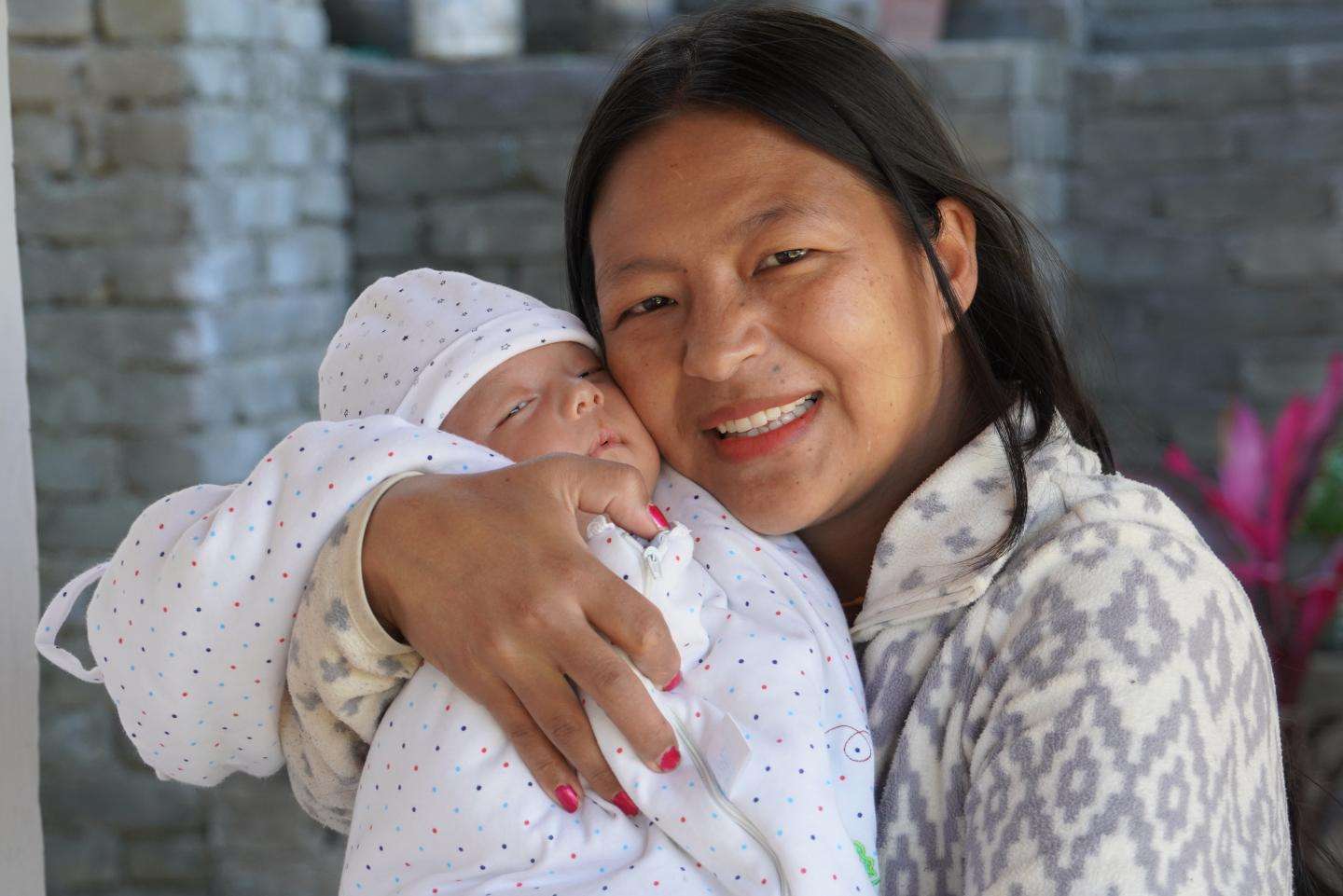
The birth of a new born baby is always welcomed heartily. Bhutanese value children as progenitors of the future and therefore do not discriminate between a girl child and a boy child. Mothers are always looked after carefully and because of strong belief, outsiders and guests are kept at bay for the first three days as it is believed that the house is polluted. On the third day after the child’s birth, a short purification ritual is performed after which outsiders pay visits to the new born child and the mother. Gifts are offered ranging from dairy products to cloth and money.
The child is not immediately named as naming a child is always the prerogative of a highly religious person. The mother and the child also visit a local temple to receive blessings from the local deity (natal deity) and the name associated with the deity is given. In some cases, the child is given the name of the day on which the child is born. Based on the Bhutanese calendar, a horoscope is written that details out the time and the date of the birth, various rituals to be performed at different times in the life of the child and to an extent predicting their future.
Marriage
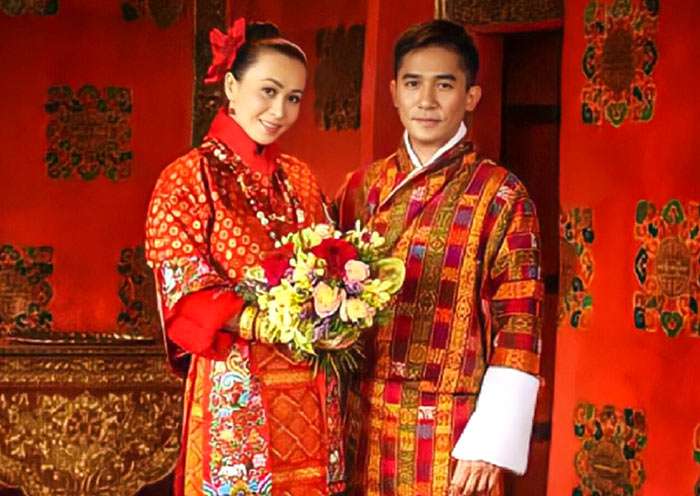
Arranged marriages were popular just a few decades back. Normally, people married among the relatives. Cross-cousin marriage is a popular tradition amongst the people of eastern Bhutan. This is now becoming unpopular among the literate mass and most of the marriages take place on their own accord depending on their choice.
Marriages are simple affairs and are kept low-key. However, elaborate rituals are performed for lasting unions amongst the bride and the bridegroom. As the religious ceremony comes to an end, parents, relatives and friends present the newlyweds with traditional offerings of scarves along with gifts in the form of cash and goods.
In the western part of Bhutan, the husband goes to the wife’s house after marriage while the practice in eastern Bhutan is that the wife usually accompanies the husband. The newlyweds may also choose to live on their own. An accepted norm of the Bhutanese way of life is that divorces carry no ignominy or disgrace and in most instances they move on with a new life partner.
Marriage
Arranged marriages were popular just a few decades back. Normally, people married among the relatives. Cross-cousin marriage is a popular tradition amongst the people of eastern Bhutan. This is now becoming unpopular among the literate mass and most of the marriages take place on their own accord depending on their choice.
Marriages are simple affairs and are kept low-key. However, elaborate rituals are performed for lasting unions amongst the bride and the bridegroom. As the religious ceremony comes to an end, parents, relatives and friends present the newlyweds with traditional offerings of scarves along with gifts in the form of cash and goods.
In the western part of Bhutan, the husband goes to the wife’s house after marriage while the practice in eastern Bhutan is that the wife usually accompanies the husband. The newlyweds may also choose to live on their own. An accepted norm of the Bhutanese way of life is that divorces carry no ignominy or disgrace and in most instances they move on with a new life partner.
Funeral
Death signifies rebirth or a mere passing on to a new life. In keeping with the traditions, elaborate rituals are performed to ensure a safe passage and a good rebirth. Important days such as the 7th day, 14th day, 21st day and 49th days are earmarked where prayer flags in the name of the deceased are erected and rituals performed.
The deceased are normally cremated while the southern Bhutanese bury their dead and the Brokpas chop off and feed them to the vultures. Elaborate rituals are also conducted on the death anniversary with erection of prayer flags. The relatives and people of the locality come with alcohol, rice, or other sundry items to attend these rituals.
Bhutanese Dress
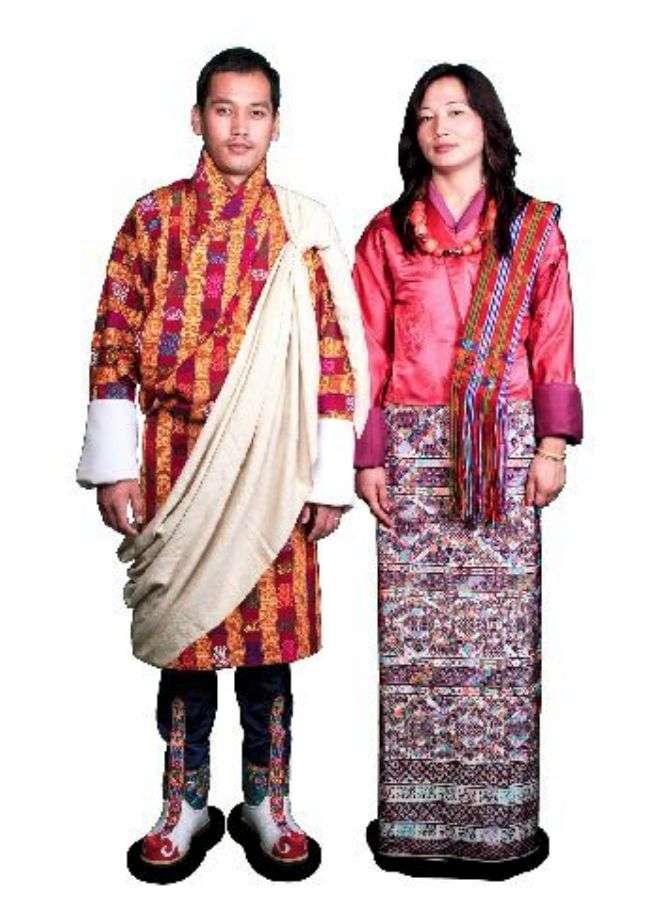
A distinctive feature of the Bhutanese is their dress that has evolved over the years. The Gho or the dress worn by Bhutanese men reaches just till their knees while Kira, the dress worn by women reaches till their ankles. The Gho is folded and tied at the waist by a traditional belt known as Kera and the pouch that is formed is used for carrying small articles such as wallet, mobiles and Doma, the betel nut. Traditionally it was used for carrying bowls and a small dagger inserted in between as was the custom then.
But the dress for the tribal and semi-nomadic people like the Bramis and Brokpas of eastern Bhutan are generally different from the rest of the Bhutanese population. The Brokpas and the Bramis wear dresses woven either out of Yak or Sheep hair.
In keeping with the tradition, it is mandatory for all Bhutanese to wear scarves while visiting Dzongs and other administrative centres. The scarf worn by men is known as Kabney while that of women is known as Rachu. The scarves worn are different in colour and signify their status or rank. While the general Bhutanese men wear a white scarf, the King and the Je Khenpo or the Head Abbot wear yellow scarves. The ministers wear orange scarves while the Judges wear green and the district administrators wear red scarves with a small white strip that runs through. The Rachu is hung over their shoulder and unlike scarves worn by men does not have any colour attached to it. They are usually woven out of raw silk with rich patterns.
Bhutanese Dress
A distinctive feature of the Bhutanese is their dress that has evolved over the years. The Gho or the dress worn by Bhutanese men reaches just till their knees while Kira, the dress worn by women reaches till their ankles. The Gho is folded and tied at the waist by a traditional belt known as Kera and the pouch that is formed is used for carrying small articles such as wallet, mobiles and Doma, the betel nut. Traditionally it was used for carrying bowls and a small dagger inserted in between as was the custom then.
But the dress for the tribal and semi-nomadic people like the Bramis and Brokpas of eastern Bhutan are generally different from the rest of the Bhutanese population. The Brokpas and the Bramis wear dresses woven either out of Yak or Sheep hair.
In keeping with the tradition, it is mandatory for all Bhutanese to wear scarves while visiting Dzongs and other administrative centres. The scarf worn by men is known as Kabney while that of women is known as Rachu. The scarves worn are different in colour and signify their status or rank. While the general Bhutanese men wear a white scarf, the King and the Je Khenpo or the Head Abbot wear yellow scarves. The ministers wear orange scarves while the Judges wear green and the district administrators wear red scarves with a small white strip that runs through. The Rachu is hung over their shoulder and unlike scarves worn by men does not have any colour attached to it. They are usually woven out of raw silk with rich patterns.