
Discover
The Kingdom of Bhutan
Land of the Thunder Dragon — where ancient traditions meet pristine.Himalayan wilderness, and happiness is the measure of progress.
The Last Shangri-La
A Kingdom Like No Other
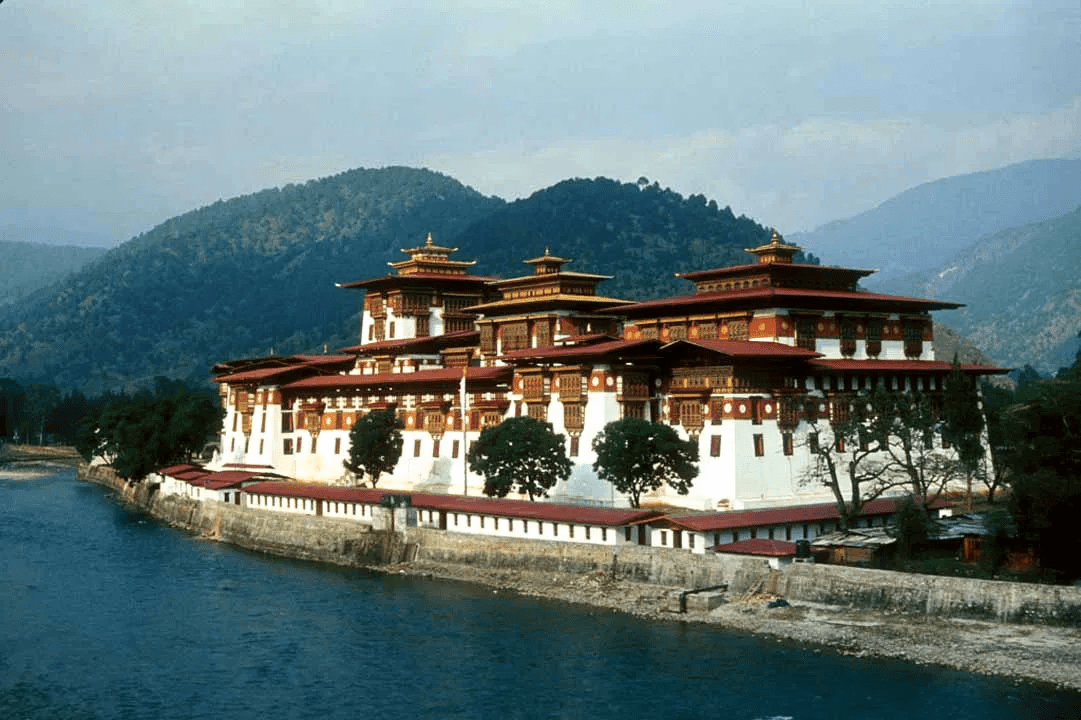
Bhutan, locally known as DRUKYUL (Land of Thunder Dragon) has remained sequestered from the rest of the world in its pristine state, unspoiled by outside influences. Bordered by autonomous region of China in the North and India in the south, the kingdom of the Lost Horizon opened its door to tourism only in 1974, since then the number of visitors to Bhutan has steadily increased. Bhutan is endowed with breathtaking natural beauty, surrounded by sacred mountains, virgin peaks and holy lakes. Its beautiful valleys and lush forests are teeming with flora and wildlife undisturbed in its natural environment. Bhutan is perhaps the last Eden, not just in part, but in its entirety. Its 46,500 square kilometer of area is covered with not less than 72% of dense forest and jungles. In less than 65 miles, Bhutan rises 25,000 feet from the subtropical jungles of the south to arctic cold of the high Himalayas. Bhutan is truly a haven for wildlife and is considered the most exclusive tourist destination in the world. The country manages to retain all the charm of the old world.
Philosophy
Gross National Happiness
Bhutan’s revolutionary development philosophy rests on four pillars — a holistic approach that has captured the world’s imagination.
Sustainable and Equitable Socio-Economic Development
This pillar focuses on improving the economic well-being of people while ensuring fairness and sustainability. The government works to create opportunities for employment, education, healthcare, and improved living standards.
Environmental Conservation
Protecting the natural environment is a key priority in Bhutan. The country maintains strict policies to preserve forests, wildlife, and biodiversity. A large portion of Bhutan’s land is protected as national parks and conservation areas. Environmental conservation ensures that natural resources remain available for future generations while maintaining ecological balance.
Preservation and Promotion of Culture
This pillar emphasizes the importance of protecting Bhutan’s rich cultural heritage, traditions, language, and values. Cultural preservation helps maintain national identity and social harmony. Traditional festivals, dress, architecture, and customs are encouraged and protected so that modernization does not erode Bhutanese culture.
Good Governance
Good governance ensures that the government operates transparently, responsibly, and effectively for the benefit of the people. It involves fair laws, public participation, accountability, and efficient public services. Strong governance helps build trust between citizens and the government while supporting the other pillars of Gross National Happiness.
A Brief History
Prior to 8th century we have no recorded history and have no clue how our ancestors have lived. However, we can only assume that the country was divided into many parts and were ruled by the village chiefs and the country in whole was known as the Lhojong Menjong (Southern Land of Medicinal Herbs).
It was during 8th century a king from Bumthang, known as Sendhu Raja had invited Guru Rinpochey (Precious Teacher), who brought Buddhism into Bhutan, to cure him from a dreadful disease that was killing him. Guru meditated at Kujey temple for three months, left his body print on the rock and subdues the local deities including powerful Shelging Karpo, who had stole the king’s life force and was the cause of King’s disease. Guru then visited many places around the kingdom where he meditated and left many body imprints. The places visited were Paro Taktsang, where he took the form of Guru Dorje Droloe to subdue the deities who were obstructing the spread of Buddhism, Tang Rimochen, Singye Dzong and many other places that are now the most visited holy sites for Buddhist pilgrims.
The Bhutanese society
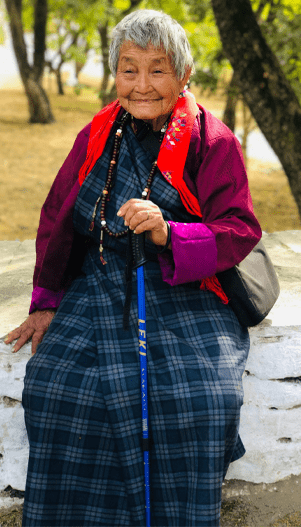
The Bhutanese society is free of class or caste system and any inhibition that is detrimental for a society to progress. In general ours is an open and a good-spirited society.
Living in a Bhutanese society generally means understanding some basic norms like Driglam Namzha, the traditional etiquette. This is a norm that desires members of the society to conduct themselves in public places. Wearing a scarf when visiting a Dzong or an office, letting the elders and the monks serve themselves first, offering felicitation scarves during ceremonies such as marriages and promotions, greeting elders or senior officials are some simple manners that harmonizes and binds together the Bhutanese society.
ormally, greetings are limited to saying Kuzuzangpo amongst equals. For seniors and elders, the Bhutanese bow their head a bit and say kuzuzangpola. But, the western ways of shaking hands has become an accepted norm.
ARTS & CRAFTS
Zorig Chusum: The thirteen traditional crafts of Bhutan
Zorig Chusum refers to the thirteen traditional arts and crafts practiced in Bhutan. The term comes from the Dzongkha words “Zorig” meaning arts and crafts and “Chusum” meaning thirteen. These crafts form an important part of Bhutanese culture and heritage and are preserved through training institutes and traditional practices.
Below are the thirteen traditional crafts with brief descriptions:
Shingzo (Carpentry)
This craft involves working with wood to construct traditional Bhutanese buildings, bridges, furniture, and religious structures such as temples and monasteries.Dozo (Masonry)
Dozo is the art of building structures using stone. Skilled masons construct walls, stupas, and traditional buildings using stones and natural materials.Parzo (Carving)
This craft includes carving wood, stone, and slate to create religious images, statues, masks, and decorative designs used in temples and homes.Lhazo (Painting)
Lhazo refers to traditional Bhutanese painting, especially religious paintings such as thangka paintings and murals found in temples and monasteries.Jinzo (Sculpture)
Jinzo involves making clay statues and sacred images of deities and religious figures that are placed in temples and monasteries.Lugzo (Bronze Casting)
Lugzo is the art of casting bronze and other metals to create statues, ritual objects, bells, and ceremonial items used in Buddhist practices.Garzo (Blacksmithing)
Garzo involves forging iron to produce tools, knives, swords, and agricultural equipment.Troeko (Ornament Making)
This craft includes making jewelry and ornaments from gold, silver, and precious stones worn during festivals and special occasions.Tsharzo (Bamboo and Cane Craft)
Tsharzo involves weaving bamboo and cane into baskets, containers, mats, and other household items used in daily life.Thagzo (Weaving)
Thagzo is the traditional weaving of textiles using wool, cotton, and silk to produce beautiful Bhutanese fabrics and traditional clothing.Tshemzo (Tailoring and Embroidery)
This craft focuses on sewing and embroidering traditional Bhutanese garments such as Gho for men and Kira for women.Shagzo (Wood Turning)
Shagzo involves shaping wood using a lathe to produce bowls, cups, plates, and other wooden household items.Dezo (Paper Making)
Dezo is the traditional method of making handmade paper from the bark of plants, used for religious texts, manuscripts, and prayer flags.
These thirteen crafts together represent the artistic heritage of Bhutan, and they are taught in institutions such as the National Institute for Zorig Chusum to ensure that the country’s cultural traditions are preserved for future generations.